Vektorium Master Fund Commentary · June 2026
We estimate that the Vektorium Fund Class A Feeder ended the first half of the year up +4.34% and down -0.79% for June.
The first half of the year was marked by a tug of war between the large cap, tech dominated U.S. equities and the rest of the world and small and middle sized businesses. We have written in the past that our long-term thesis is one where we believe the latter landscape (international and small to medium sized businesses) are set up in a much better environment for outperformance in the long run. We are, as always, thankful that our counterparts in Canada at Wealhouse Capital continue to travel the globe to meet management teams to unearth these great opportunities.
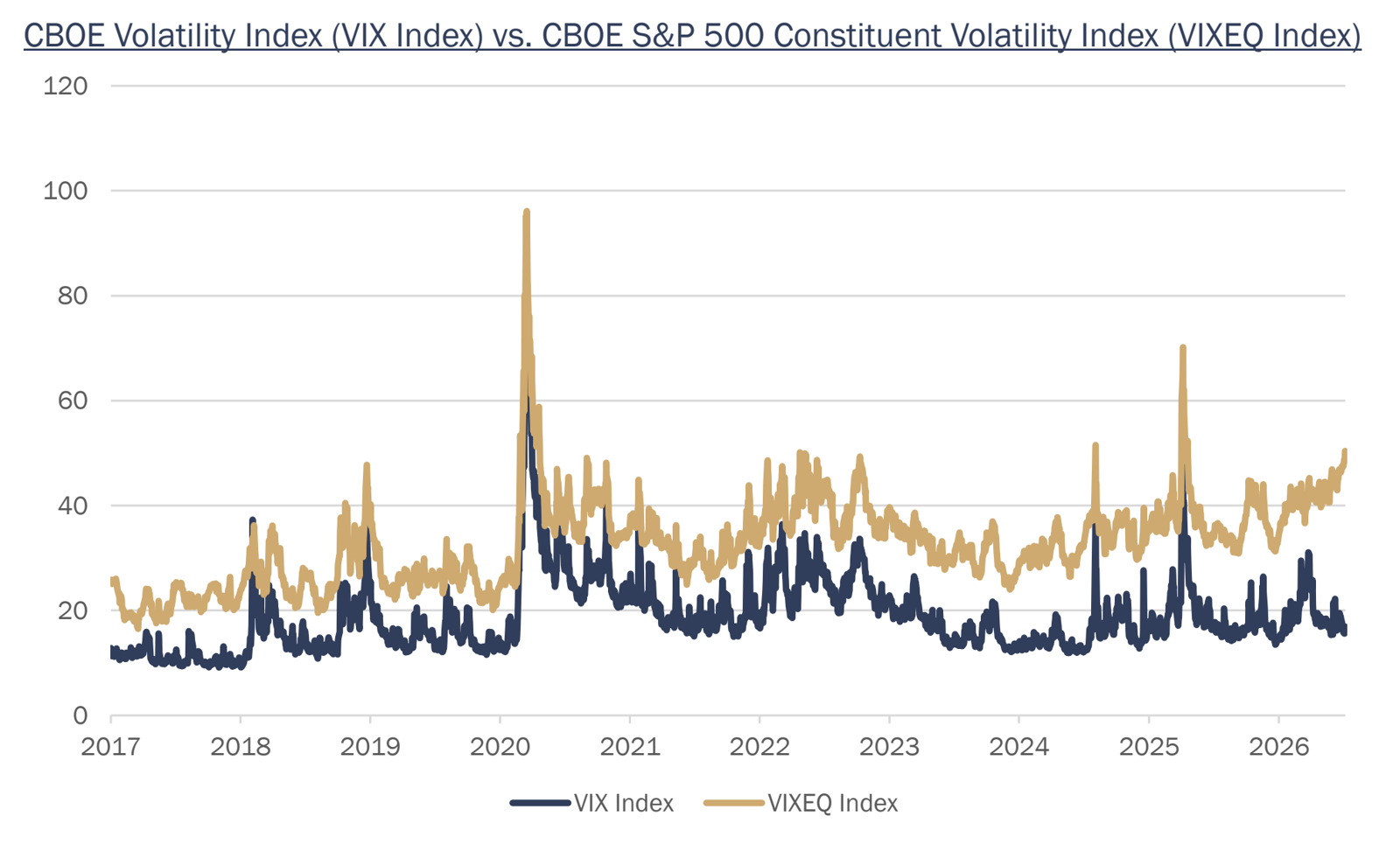
We have been positioned more on the defensive front as we have noticed that equity markets, particularly large cap U.S. equities, have displayed some level of complacency. This is evident when we look at how the index level of the S&P500 and its constituents are behaving. The index level has exhibited lower volatility than the underlying components would dictate. We’ll save the technical jargon here, but essentially the calmness at the surface of the waters does not show the turbulence brewing below. As semiconductors near twenty percent weighting in the S&P 500 and the implied volatility of these businesses is very high, we are positioned in a fair amount of index hedges. This worked well in the first half of June and was then reversed in the last two days of the month as a strong quarter-end rally pushed volatility back down. We believe that at these levels of volatility (VIX has been hovering around 16 lately), we are in a position to keep our hedges on should the markets rotate further away from large cap tech names in the second half of the year.
As we have many conversations with our counterparts at Wealhouse Capital to the north, we have been amazed at how many great businesses they continue to find that meet the threshold for investing: great franchises, solid balance sheets, near to medium term growth potential, and importantly, management competence. We know the quants are now front and center, and every company gets filtered into screens and models. What the models don’t tell you is the actual vision management teams have and how well aligned they are for the future success of the business. Scott and the team in Canada have a great checklist for learning if management are just followers or actual visionaries.
One example of this is our investment in DRI Healthcare trust (DHT-u CN). The business operates as a royalty via the acquisition of patent protected medicines. The key driver of success in a royalty business is the strong capital allocation discipline of management. As Scott Morrison has met the team and got to know the leadership team, they are clearly very disciplined and strategic in their thinking. The ability to stay focused on a quality portfolio of medicines while keeping financial discipline on the balance sheet has created a strong franchise. These types of businesses are hard to compete with as the market for funding acquisitions will go those who have proven track records of generating strong, consistent cashflows to attract debt holders.
With respect to the macro backdrop. The U.S. Federal Reserve witnessed a changing of the guards in the second quarter as Kevin Warsh took over the Chairman role from outgoing Chairman, Jerome Powell. We could write at length about central banking, the idea of credible commitment, the game theory between FED communications and market reactions, but we will save that and summarize what we believe are the key pivots that may unfold in the future with this change.
First and foremost, Chair Warsh has made it abundantly clear that between the dual mandate of price stability and full employment, he is adamant that price stability is the more important of the two. This would put him into more of the traditional camp of central bankers where in most regions price stability is the only mandate. As of now, interest rates are unchanged since his first FOMC press conference after an initial rally. The key to Warsh creating a more credible FED is to get the market for inflation expectations (yes there is one that trades) comfortably near 2% (the Fed’s inflation target). We have pointed out in past communications that we think the inflation adjusted thirty year bonds in the U.S. (30 year TIPS) are more attractive than nominal bonds and we continue to hold this position.
As always, our hedging vector continues to be a key ingredient to our long term goal to grow and protect your capital. As we mentioned June was another example of a roller coaster ride in volatility. Where we stand now is that the market for volatility (and therefore the cost of our portfolio insurance vector) is near the recent cycle lows. While we know we are in the summer quieter period, we are happy to keep prudently hedging the portfolio. With technology now a very large weight in the marketplace we find that VIX, just under 16, to be a very attractive level.
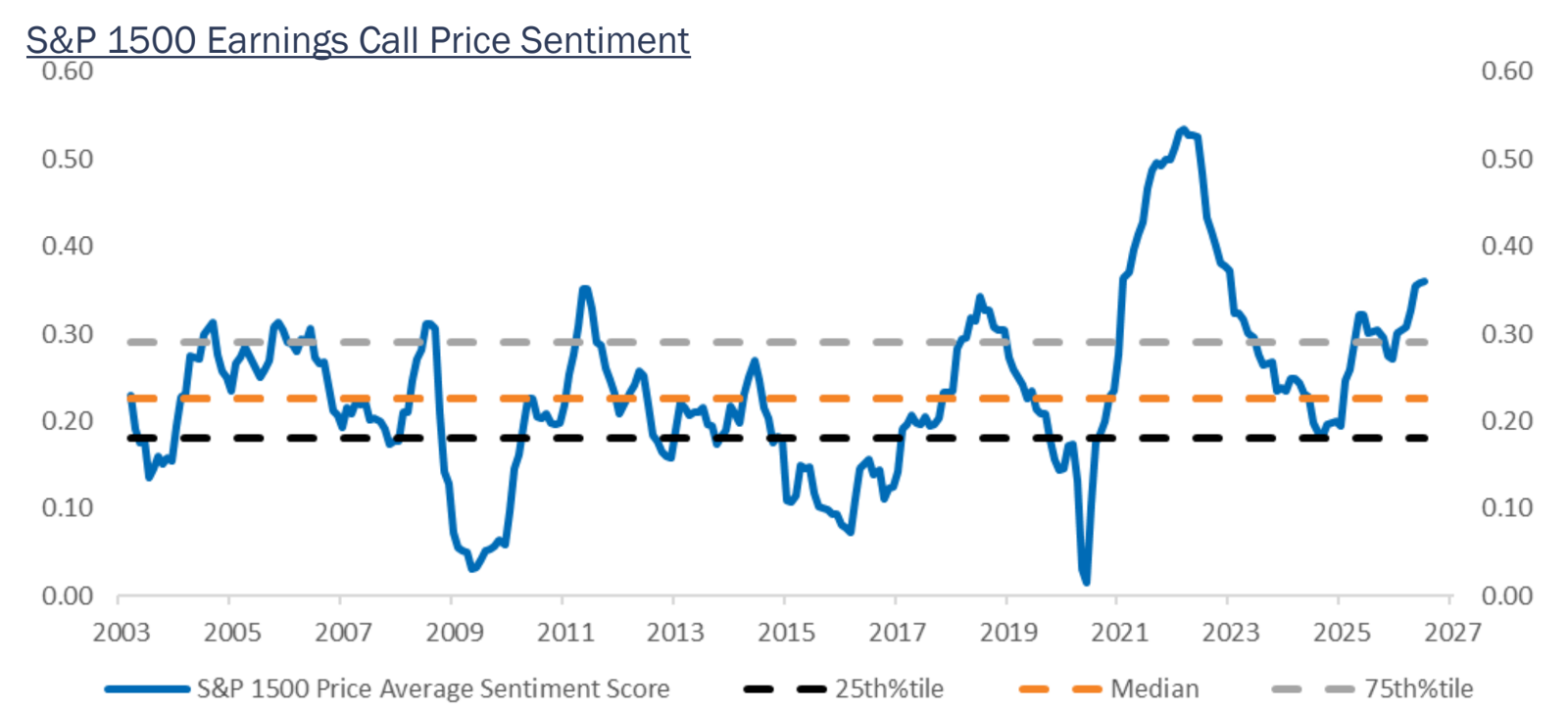
As we look toward the second half of 2026 and beyond, we know that what happens in interest rates is going to be an important sign for how well equity markets can do. A FED that is focused on credibility and price stability can be a tailwind if they can get inflation expectations lower and long-term interest rates. For now, this is more of an open-ended question to us as interest rates, while attractive, have yet to show a meaningful declining trend. Positioning in strong businesses with robust balances sheets is how we continue to invest capital, so they are not subject to financial leverage concerns if interest rates stay in this higher for longer regime.
As always, we thank you for your continued investment with us, and we are steadfast in our core mandate of growing your capital in a prudent long-term risk adjusted basis.
Best,
V
Disclaimer
This Commentary expresses the views of the author as of the date indicated and such views are subject to change without notice. Wealhouse International SEZC has no duty or obligation to update the information contained herein. This Commentary is being made available for educational purposes only and should not be used for any other purpose. The information contained herein does not constitute and should not be construed as an offering of advisory services or an offer to sell or solicitation to buy any securities or related financial instruments in any jurisdiction. Certain information contained herein concerning economic trends and performance is based on or derived from information provided by independent third-party sources. Wealhouse International SEZC believes that the sources from which such information has been obtained are reliable; however, it cannot guarantee the accuracy of such information and has not independently verified the accuracy or completeness of such information or the assumptions on which such information is based. All calculations and data presented is based on unaudited data and is being provided in response to specific request and is intended for internal use only. The information is provided “as is” without warranty of any kind and is subject to adjustments. Such adjustments could have a material impact on the estimated figures and are subject to revision. Wealhouse does not accept any responsibility or liability for the accuracy, content, completeness, legality, or reliability of the information contained herein. No warranties, promises and/or representations of any kind, expressed or implied, are given as to the nature, standard, accuracy or otherwise of the information provided herein nor to the suitability or otherwise of the information to the reader’s particular circumstances.